Back To Top

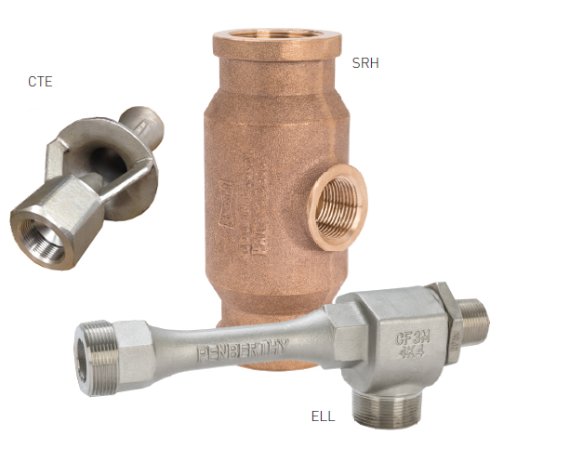
Three series of Penberthy steam jet heaters are used for heating liquids in line.

One model is available for heating liquids in tanks. Models ELL, HLM, and SRH in-line mixers can heat in-line while transporting the process media. Steam jet heaters optimize the condensation of steam into the motive medium to heat the fluid. CTE2 circulating tank eductor heaters are open tank heaters that combine steam and liquid in vessels where contents may be recirculated.

Principle of Operation

Steam jet heaters optimize the condensing of steam into operating liquids to provide efficient fluid heating. They are essentially jet pumps and, as such, operate on the principle of one fluid entraining a second fluid. Steam jet heaters have three common features: inlet, suction, and discharge.  

  • Inlet – The operating medium (liquid, steam, or air) under pressure enters the inlet and travels through the nozzle into the suction chamber. The nozzle converts the pressure of the operating medium into a high velocity stream, which passes from the discharge side of the inlet nozzle.

  • Suction – Pumping action begins with vapor, gases, or liquid in the suction chamber are entrained by the high velocity stream emerging from the inlet nozzle, lowering the pressure in the suction chamber.  The resulting action causes the liquid, gas, or vapor in the suction chamber to flow toward the discharge.

  • Discharge – The entrained material from the suction system mixes with the operating medium and acquires part of its energy in the parallel section. In the diffuser section, part of the velocity of the mixture is converted to a pressure greater than the suction pressure, but lower than the operating medium pressure.

Penberthy Series ELL, HLM, SRH, and CTE2 for Heating Liquids

Specs

Materials
Bronze, Carbon Steel, 316SS
Sizes
1/2" to 12"
Pressure (Max)
150 psig (10.3 barg)

Features

  • Simple design with no moving parts to wear out.
  • No packing glands.
  • No lubrication required.
  • Virtually maintenance-free.
  • Easy to install without special structures or foundations.
  • Cast or fabricated constructions.
  • Variety of materials to suit specific characteristics of the process liquids.
  • Critical flow paths machined smoothly with no abrupt turns or steps, producing the most efficient flow during the motive function.