Back To Top
Practical, simple and cost-effective alternatives for process industries to pump a range of liquids.

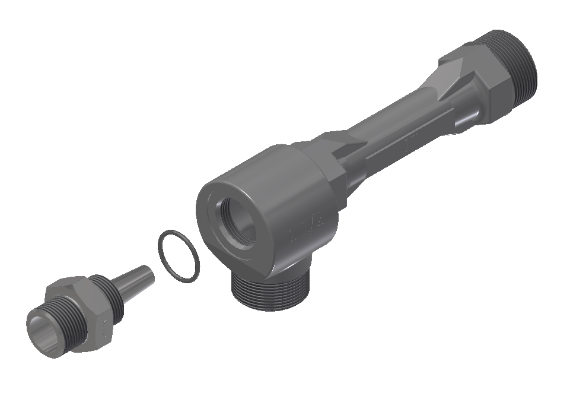
There are two basic series of Penberthy jet pumps available for pumping liquids:

  • The L Series has three models, the LL, LM and LH which use liquid as the operating medium.

  • The G Series has two models, the GL and GH, using steam as the operating medium.

Each of the five models are available in 15 different sizes, ranging from ½” to 12.

Penberthy Series LL, LM, LH, GL, and GH Jet Pumps for Pumping Liquids

Specs

Materials
Bronze, Carbon Steel, 316 SS, PVC, PP, PVDF
Sizes
1/2" to 12"
Pressure Range
15 to 200 psig (1 to 13.8 barg)
Temperature (Max)
to 200°F (93°C)

Features

  • Simple design with no moving parts to wear out.
  • No lubrication required.
  • Virtually maintenance-free.
  • Easy to install without special structures or foundations.
  • Self-priming.
  • Cast, fabricated, or non-metallic constructions.
  • Variety of materials to suit specific characteristics of the process liquids.
  • Critical flow paths machined smoothly with no abrupt turns or steps, producing the most efficient flow during the motive function.

Principle of Operation

All jet pumps operate on the principle of a fluid entraining a second fluid.  Although design and construction may vary, this applies to all jet pumps.​​ All jet pumps have three common features: inlet, suction and discharge.  

  • Inlet – The operating medium (liquid, steam or air) under pressure enters the inlet and travels through the nozzle into the suction chamber.  The nozzle converts the pressure of the operating medium into a high velocity stream, which passes from he discharge side of the inlet nozzle.

  • Suction – Pumping action begins with vapor, gases or liquid in the suction chamber are entrained by the high velocity stream emerging from the inlet nozzle, lowering the pressure in the suction chamber.  The resulting action causes the liquid, gas or vapor in the suction chamber to flow toward the discharge.

  • Discharge – The entrained material from the suction system mixes with the operating medium and acquires part of its energy in the parallel section.  In the diffuser section, part of the velocity of the mixture is converted to a pressure greater than the suction pressure, but lower than the operating medium pressure.